Teeny Tiny Homes explains its standard tiny home rangehood venting in Caboolture, QLD, including external exhaust plus relevant installation documentation.
Buyers comparing tiny homes need to know whether external rangehood venting is included in the quoted scope. Tiny home rangehood venting matters because steam, airborne grease and cooking odours can move quickly through a compact interior. We publish our kitchen and ventilation inclusions so buyers can assess the scope before confirming a design.
Is an Externally Vented Rangehood Included as Standard?
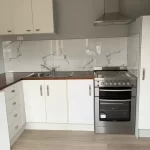
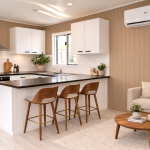
Yes, we include a new canopy rangehood vented externally as part of our standard kitchen and living inclusions. The same published schedule includes a new electric cooktop and oven, while our electrical inclusions state that the rangehood and bathroom mechanical ventilation discharge outside.
This means tiny home rangehood venting covers more than placing an appliance above the cooktop. Extracted cooking air is directed outdoors rather than simply filtered and returned to the living space. Buyers can review our standard pricing and inclusions before comparing a selected design, optional upgrades and the final quotation.
What Does External Venting Provide in a Compact Kitchen?
External venting carries extracted air from above the cooktop through ductwork to an outdoor outlet. This assists with managing moisture, odours and airborne grease at their source. Australian Government ventilation and airtightness guidance also recommends venting mechanical kitchen extraction outside rather than into roof spaces or other cavities.
- Moisture management: Cooking vapour is discharged outside instead of remaining available to settle on windows, walls and cabinetry.
- Odour control: Extracted cooking air leaves the home rather than being recirculated through the kitchen and adjoining areas.
- Grease capture: The rangehood filter captures airborne grease before the extracted air enters the duct.
- Compact-home comfort: Source extraction reduces the movement of cooking by-products into nearby living and sleeping spaces.
- Ongoing care: Filters require cleaning according to the supplied appliance manual.
What Should You Confirm Before Approving Your Build?
Our public inclusion schedule confirms the externally vented canopy rangehood, but it does not publish a brand, model, duct diameter, airflow rate, noise rating or outlet position. These details should be checked against the quotation and documentation for the selected layout rather than assumed from another floor plan or display home. Our pre-layout design checklist also explains why ventilation and wet-area decisions should be addressed early.
Our documentation list includes a Form 12 for the exhaust and ventilation installation and an electrical safety compliance certificate. Buyers considering the optional gas cooktop or standalone gas cooker should confirm whether that selection changes the appliance specification, clearance or duct arrangement. Confirming the tiny home rangehood venting scope in writing keeps the kitchen selection, documentation and quoted work aligned.
Teeny Tiny Homes and Tiny Home Rangehood Venting
A clear inclusions check helps buyers compare the actual kitchen package instead of relying on a vague description of a completed home. At Teeny Tiny Homes, we identify the externally vented canopy rangehood, standard electric cooking appliances and relevant ventilation documentation within our published scope. Confirming model-specific details during the design process provides a sound basis for reviewing the proposed layout and quotation.
Talk to us to confirm the rangehood specification and external venting arrangement for your preferred tiny home layout.